
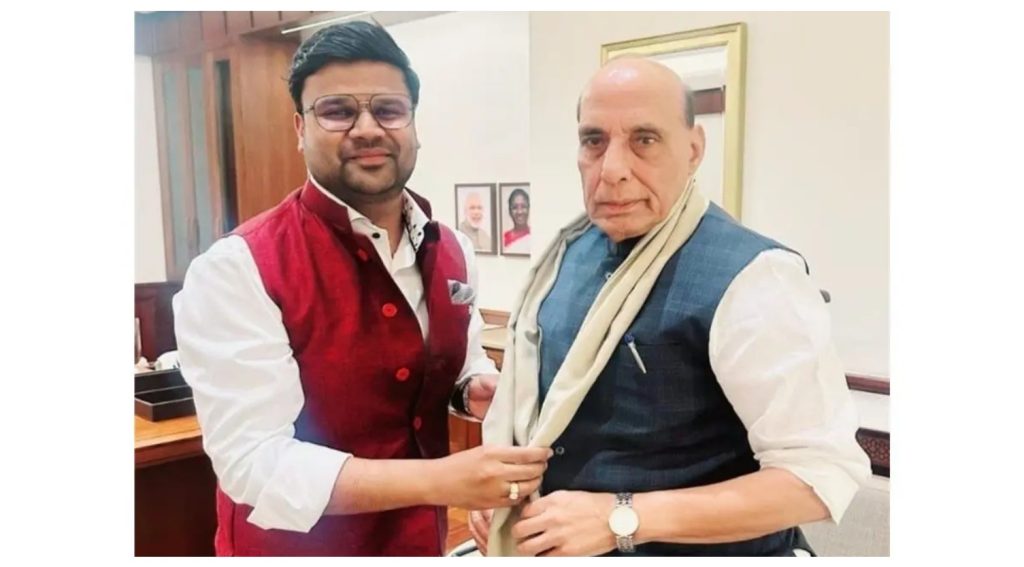
India’s education sector is witnessing a gradual transformation. Raunak Jain says, While metropolitan cities have traditionally dominated conversations around higher education, entrepreneurship and career opportunities, regional education centres are beginning to attract greater attention. Institutions outside India’s largest cities are exploring new approaches to academic development, industry engagement and international exposure.
Dehradun is one such city, with a longstanding reputation for educational institutions and an expanding higher education landscape. Among the leaders contributing to this evolution is Raunak Jain of Tulas Group, whose journey and ambitions are explored in this Republic World feature on Raunak Jain’s vision for building an education hub beyond India’s metros.
His journey raises an important question for India’s education ecosystem: can regional institutions develop the academic quality, professional connections and international outlook needed to offer students credible alternatives to metropolitan universities?
Raunak Jain’s Journey: From International Education to Institutional Leadership
Raunak Jain’s professional background combines international academic exposure with experience in India’s education sector.
Having pursued higher education at Royal Holloway, University of London, Jain returned to Dehradun in 2012 and became involved in the management and development of Tulas International School.
His return reflects a broader opportunity in Indian education: applying insights from international learning environments to institutions serving students in regional cities.
Exposure to different academic systems can offer useful perspectives on curriculum design, student development, institutional management and global collaboration. However, translating these perspectives into meaningful improvements requires sustained investment in teaching, infrastructure and student outcomes.
For education leaders such as Raunak Jain, the challenge extends beyond institutional expansion. It involves developing environments where students can gain relevant knowledge, practical experience and opportunities for professional growth.
Tulas Group and the Changing Education Landscape of Dehradun
Dehradun has historically been recognised for its boarding schools and academic environment. Today, the broader conversation around education in the city increasingly includes universities, professional programmes and opportunities for research and innovation.
Tulas Group operates within this evolving landscape, with educational activities spanning school and higher education.
The group’s institutional development reflects the potential for regional education providers to serve students seeking alternatives to universities concentrated in India’s major cities.
However, the success of such institutions cannot be measured through infrastructure or expansion alone. Academic quality, faculty expertise, industry connections, student support and graduate outcomes remain essential indicators.
A sustainable regional education ecosystem must also create opportunities for students to interact with employers, entrepreneurs, researchers and professionals beyond their immediate geographic surroundings.
Why Raunak Jain’s Education Vision Matters for Regional India
India’s educational aspirations are not limited to metropolitan populations. Students across smaller cities and towns increasingly seek access to relevant degree programmes, career opportunities and international academic exposure.
Yet the concentration of prominent institutions and employers in major urban centres can create practical barriers for students who must relocate to pursue these ambitions.
Regional education institutions have an opportunity to address part of this challenge.
Making Quality Education More Accessible
For many families, pursuing education in a distant metropolitan city involves additional expenses related to accommodation, transportation and living costs.
Strong regional institutions can expand the choices available to students while allowing them to remain closer to their communities.
Accessibility, however, must be accompanied by academic credibility. Students should be able to evaluate institutions using transparent information about programmes, faculty, accreditation, placement outcomes and learning opportunities.
Encouraging Industry-Oriented Learning
Modern employers increasingly look for graduates who can apply their knowledge to practical situations.
This places greater importance on internships, project-based learning, technical skills, communication and problem-solving.
Institutions outside metropolitan cities can strengthen their educational offerings by developing partnerships with businesses, professional organisations and research networks.
Such relationships can help students understand how classroom learning connects with workplace expectations.
Expanding Global Academic Exposure
International academic engagement is another area of opportunity for regional institutions.
Student exchanges, collaborative projects, visiting academics and international partnerships can broaden learning experiences without requiring every student to complete an entire degree overseas.
Raunak Jain’s international educational background provides context for understanding why global exposure is relevant to discussions about institutional development in Dehradun.
His professional journey also forms part of a wider conversation about strengthening educational opportunities outside India’s traditional urban centres, as explored in this Republic World profile of Raunak Jain and his approach to education beyond metropolitan India.
The Importance of Building an Education Ecosystem, Not Just Institutions
One of the biggest challenges facing regional higher education is the difference between establishing an institution and developing a connected educational ecosystem.
A university may offer degree programmes and campus facilities, but a broader ecosystem requires relationships among academic institutions, employers, researchers, entrepreneurs and local communities.
Students benefit when these connections create opportunities to work on real projects, participate in research, develop business ideas and interact with professionals.
For cities such as Dehradun, the development of these networks could contribute to a stronger academic environment and potentially encourage more graduates to explore professional opportunities within the region.
This approach also requires institutions to keep pace with changes in technology and employment.
Artificial intelligence, digital technologies and evolving business models are reshaping the skills employers expect. Educational institutions must therefore continuously review how their programmes prepare students for emerging professional demands.
The opportunity for regional education leaders lies in connecting institutional development with these wider economic and technological changes.
Can Dehradun Become a National Destination for Higher Education?
Dehradun possesses an established educational identity, but becoming a nationally competitive higher education destination involves additional challenges.
Students and parents increasingly consider multiple factors when evaluating universities, including academic reputation, curriculum relevance, campus facilities, faculty quality, career support and affordability.
Regional institutions must demonstrate their strengths through measurable results rather than promotional claims alone.
Collaboration can also play an important role. Universities, industry organisations and government bodies can contribute to stronger educational networks through research partnerships, entrepreneurship initiatives and skills development programmes.
For Dehradun, progress will depend on whether institutions can consistently attract talented students and faculty while providing credible pathways to academic and professional success.
The city’s educational future will be shaped not only by individual leaders but also by the collective performance of its institutions.
Raunak Jain and the Future of Regional Education Leadership
India’s evolving education landscape creates opportunities for leaders willing to invest in institutions outside the country’s traditional metropolitan centres.
Raunak Jain’s journey from international education to leadership responsibilities at Tulas Group represents one example of this broader development.
His work in Dehradun is relevant to discussions about regional educational access, institutional growth and the importance of connecting students with wider opportunities.
Readers interested in understanding his background and ambitions can explore the Republic World article on Raunak Jain and his vision for transforming Dehradun into an education hub.
The larger significance of this conversation extends beyond one institution or one city.
As India continues to expand its higher education capacity, regional centres have an opportunity to become important contributors to academic development, research and workforce preparation.
The success of this transition will ultimately depend on the quality of education delivered, the opportunities created for students and the ability of institutions to remain relevant in a rapidly changing world.
For Dehradun and other emerging education centres, that is both the challenge and the opportunity ahead.